
The Challenge of Cross-Border Payments in Africa
For decades, sending money across African borders has been plagued by high fees, slow processing times, and limited accessibility. Traditional banking systems often charge 8-12% in fees for international transfers, and transactions can take 3-5 business days to complete. For many Africans, especially those in rural areas, access to these services remains a significant challenge.
Enter USDC: A Game-Changer for African Finance
USDC (USD Coin) is a digital dollar—a stablecoin pegged 1:1 to the US Dollar. Unlike volatile cryptocurrencies like Bitcoin, USDC maintains a stable value, making it ideal for everyday transactions and remittances.
Why USDC Matters for Africa
1. Instant Transfers
With USDC, cross-border payments settle in minutes, not days. Whether you're sending money from Lagos to Nairobi or from Johannesburg to Accra, the transaction is nearly instantaneous.
2. Lower Fees
Traditional remittance services often charge between 5-12% in fees. USDC transfers can cost as little as a few cents, saving families and businesses significant amounts of money.
3. Stable Value
Unlike local currencies that may experience volatility, USDC maintains its value relative to the US Dollar. This stability is crucial for businesses managing international payments and individuals receiving remittances.
4. Financial Inclusion
USDC doesn't require a traditional bank account. Anyone with a smartphone can send and receive digital dollars, opening financial services to the estimated 350 million unbanked adults in Africa.
Real-World Impact
Consider a Nigerian freelancer working for international clients. Previously, receiving payments meant waiting days for wire transfers and losing a significant percentage to fees. With USDC, that same freelancer can receive payment within minutes and convert it to local currency at competitive rates.
Or think about a family in Kenya receiving support from relatives in South Africa. What once cost $15-20 in fees for a $200 transfer now costs mere cents, putting more money in the hands of those who need it.
How Dayfi Leverages USDC
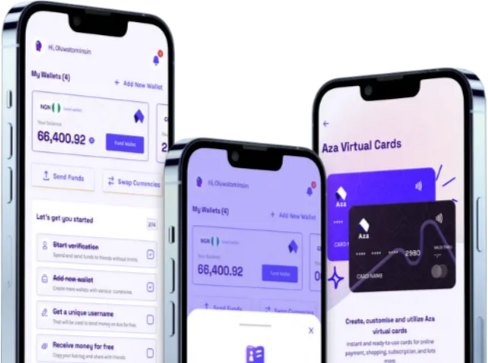
At Dayfi, we've built our platform around USDC to bring these benefits to everyday users across Africa. Our infrastructure enables:
- Seamless conversion between USDC and local African currencies
- Instant transfers between Dayfi users across 20+ African countries
- Competitive exchange rates with transparent pricing
- Bank-grade security to protect your funds
The Road Ahead
The adoption of USDC and stablecoin technology in Africa is still in its early stages, but the trajectory is clear. As more businesses and individuals discover the benefits of digital dollars, we expect to see:
- Increased adoption of USDC for B2B payments across Africa
- Greater integration with traditional banking systems
- Expansion of USDC-enabled services to more African countries
- Growing use cases in e-commerce, freelancing, and trade
Conclusion
USDC represents more than just a technological innovation—it's a pathway to financial empowerment for millions of Africans. By combining the stability of the US Dollar with the efficiency of blockchain technology, USDC is helping to build a more connected, accessible, and efficient financial system across the continent.
At Dayfi, we're proud to be at the forefront of this transformation, making global payments accessible to everyone in Africa.
Ready to experience the future of payments? Download Dayfi today and start sending money across Africa instantly.